We are proud to a Bee Friendly Certified Farm
Here on the homestead we choose not to use herbicide, insecticides or fungicides on our crops. We use companion planting and crop rotation to minimize pest, use the mulching method to control weeds, and use organic solutions if needed at the appropriate times. We do a ton of work by hand to eliminate the use of chemicals, since we understand the importance of bees in our environment and our food supply.
Let’s step into the beautifully complex world of the hive.
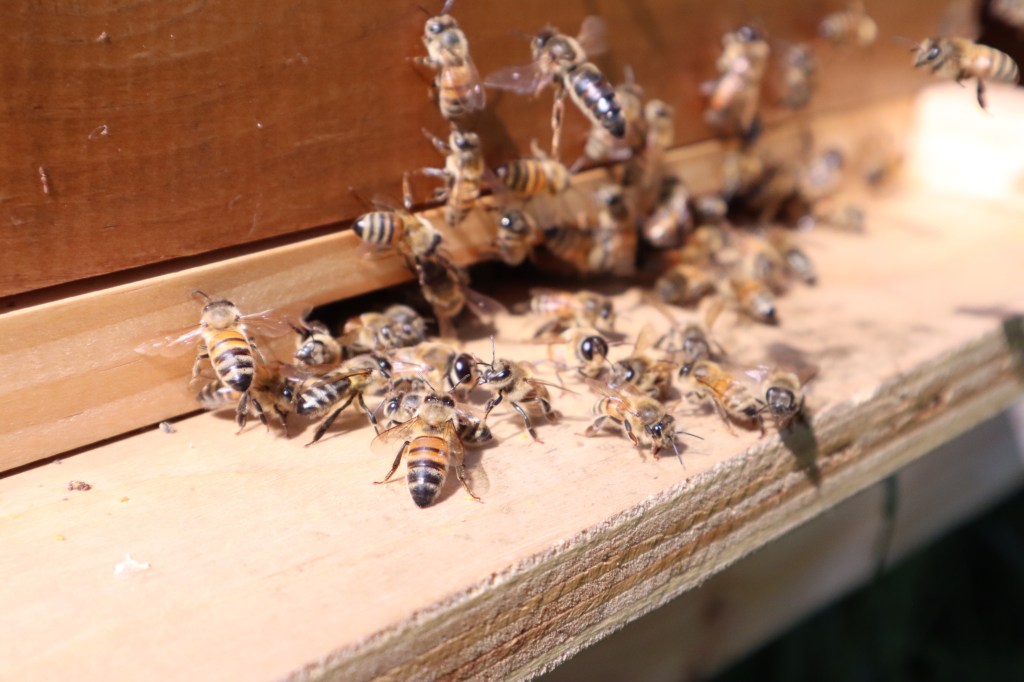
A newly emerged (hatched) queen needs to take mating flight before she can start to lay eggs to build her colony. The virgin queen leaves the hive to mate with multiple drones (male) so she can have genetic diversity in her colony. A queen bee will lay up to 2,000 eggs per day in the spring.
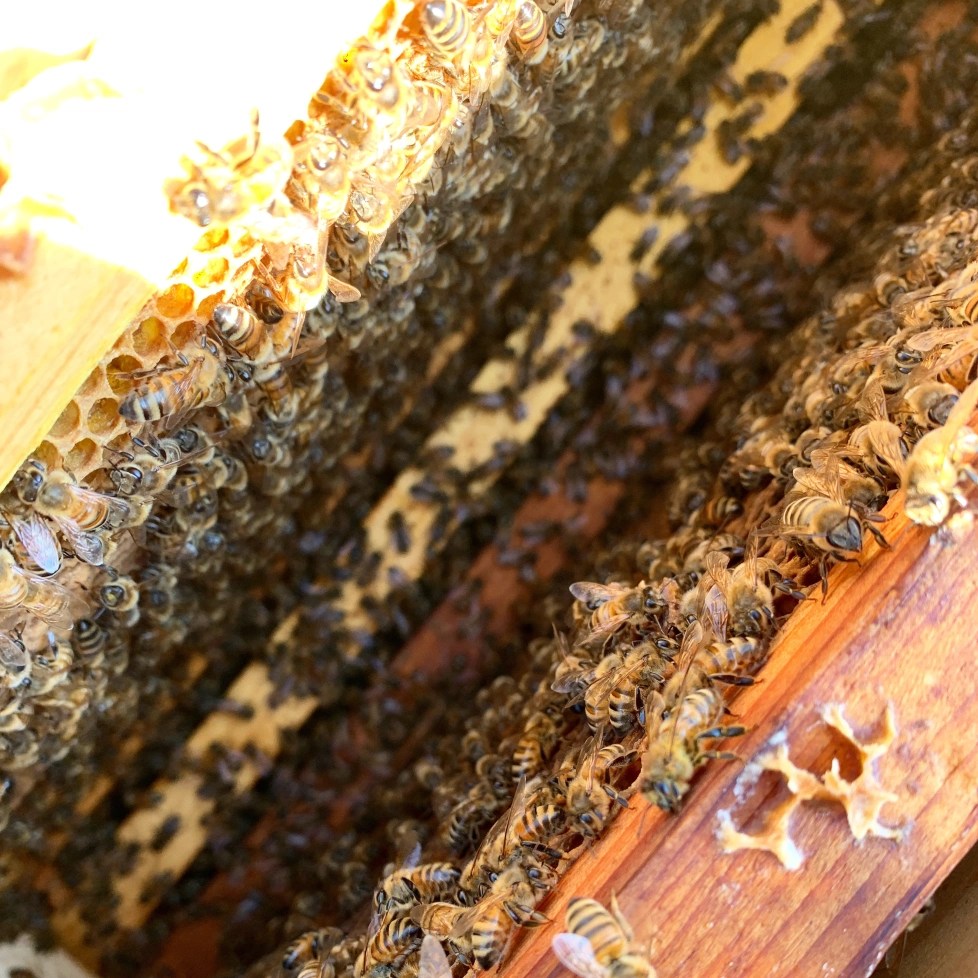
Here is a peek into a hive during an inspection to make sure things are as they should be. Beekeepers check on colonies to make sure they are healthy; the colony has a queen, a lot of bees and room for the queen to lay. There are no pest such as the small hive beetle, wax moths and varroa destructor mite and we manage in these ways. Small hive beetles eat the bees pollen source, we place cut up dry swiffer pads on top of the frames allowing them to get stuck after the bees corner them there. Wax moths eat the beeswax. We take the eaten frames out and freeze them, killing the moth and any larva. This only takes place in hives that are weak or a large swarm occurred. Then, we render that wax since it was destroyed. We also look for the notorious varroa destructor mite, who is the vampire of the bees. These mites hide in the cells of larva and feed on the fat of the developing bee, causing the new bees to not develop properly and causing deformities. We have to treat for these mites or they will destroy even the strongest of colonies.
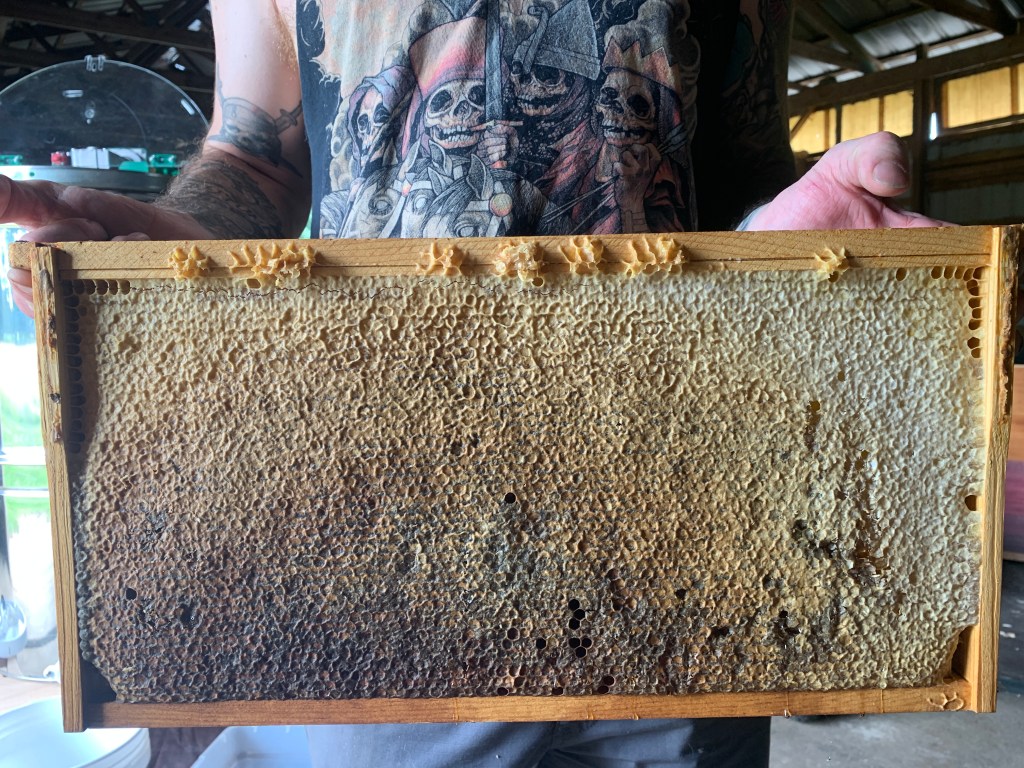
We harvest once a year before August so we can monitor and treat the hives for varroa mites. We only remove a few frames of honey per hive to ensure they have enough to get through winter. Any weak hives will be combined with stronger hives come October so everyone has a better chance of over wintering. Strong monitoring of hives are done before the first frost. We also check the weight of the hives during the winter by trying to lift the hive base. If I cannot budge the hive then they have enough winter stores, if I can move the hive I make winter sugar patties to substitute for short food storage. Bees like any other living creature eat more in colder weather to stay warm, thus it’s important to monitor honey stores before winter, which is why we don’t harvest all of the honey here on our homestead.
We have a belief here, ” If you take care of the bees, they will take care of you”. We plant sunflowers every year just for them, we do plant other flower varieties as well. However, the sunflowers are everyones favorite.
It is wonderful to harvest the liquid golden sunshine and savor it in the winter months to be reminded of warmer days and the constant buzzing of bees while in the flower patch.
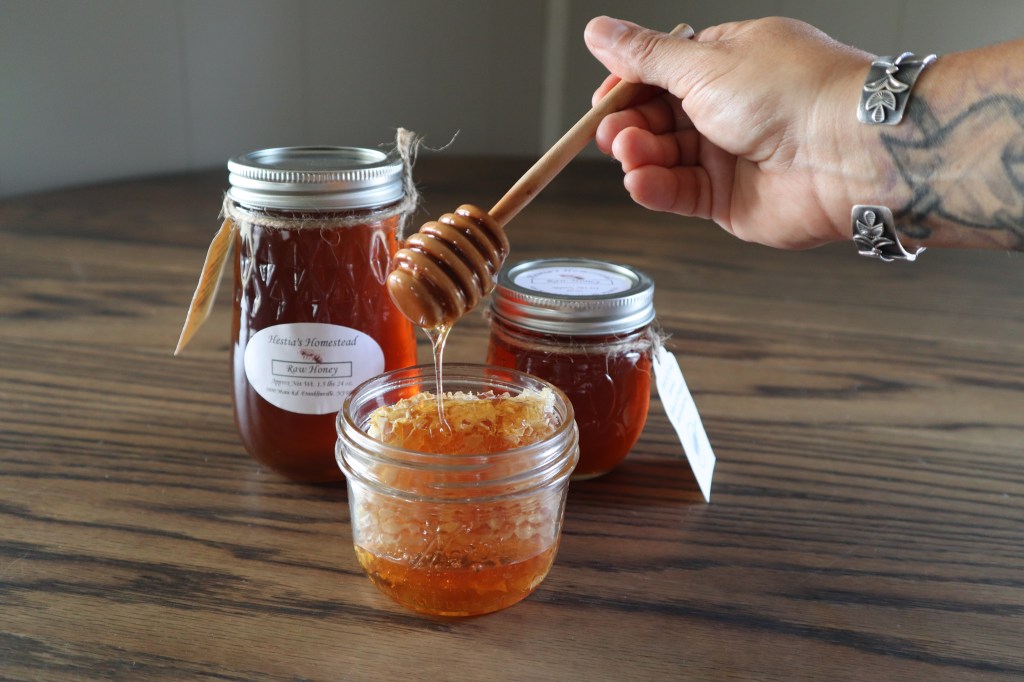
Why Does My Honey Crystallize?
Crystallization is a natural and healthy process that happens to raw, unfiltered honey over time. It means your honey is pure and minimally processed — just the way nature intended.
Is Crystallized Honey Still Good?
Absolutely! Crystallized honey retains all the beneficial enzymes, pollen, and antioxidants that make raw honey so special. It’s perfectly safe to eat and still just as delicious.
How Can I Use It?
• Spread it on toast, biscuits, or crackers.
• Scoop and stir into yogurt, tea, or oatmeal.
• Use it in baking and marinades just like liquid honey.
How Do I Soften It?
Place the jar in a bowl of warm (not boiling) water and let it sit until it softens. Never microwave raw honey — high heat can damage its natural benefits.
Hestia’s Homestead LLC all rights reserved
Photography by Hestia’s Homestead LLC
 Hestia's Homestead